©UNODC
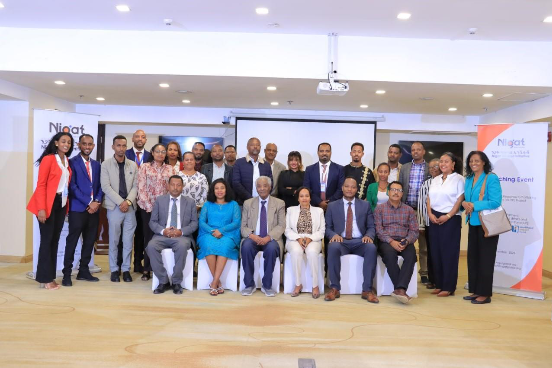
The image captures the official launch of RR-TIP (Resilence and Response to Trafficking in Persons), a collaborative initiative led by Nigat Global Initiative to strengthen prevention, survivor-centered reintegration, and accountability in response to trafficking in persons and related forms of exploitation. The initiative brings together civil society actors, media professionals, practitioners, and institutional stakeholders.
Vienna, 25 March 2026. My name is Daniel Melese Areda, I am the Founder and CEO of Nigat Global Initiative (NGI), an Ethiopian-led civil society organization established in 2024 to address human trafficking, unsafe migration, and organized crime through survivor-centered reintegration and prevention.
Our work focuses on protecting human dignity by reducing vulnerability to exploitation, disrupting harmful systems, and supporting survivors to rebuild their lives through sustainable livelihoods, social inclusion, and access to opportunity. We work closely with affected communities, survivors, media professionals, and institutional actors to ensure that reintegration, accountability, and prevention are treated as interconnected parts of justice.
Since its establishment, NGI has contributed to prevention and response efforts by documenting trafficking and smuggling risks, facilitating dignified livelihood and job placement pathways for survivors, and conducting community-based awareness and education initiatives. We also engage in media and policy work to strengthen accountability and promote ethical, evidence-based reporting on migration and trafficking.
UNODC has become an important partner in strengthening the link between locally rooted work and global legal and policy frameworks. Through engagement with the Civil Society Unit and the WhatsOn platform, our organization has gained visibility, institutional learning opportunities, and access to dialogue spaces that allow field-level realities and survivor perspectives to inform international discussions related to UNTOC. Through Constructive Dialogues on UNTOC Review Mechanism, NEGAT was able to bring our local experience to governments in Vienna. These grassroot experiences are essential for governments’ policy decision-making rooted in local realities. Through its vast network of NGOs, UNODC has supported us in reaching and returning victims of trafficking trapped in faraway countries.
One of the most meaningful moments in my work was accompanying a survivor of trafficking linked to an organized criminal network through her reintegration journey and later welcoming her as a member of our team. After rebuilding safety, confidence, and economic independence, she now works alongside us to prevent trafficking and support others at risk. Her story is a powerful reminder that justice is incomplete without reintegration, dignity, and survivor leadership.
The most challenging part of this work is confronting the deep structural inequalities and organized systems that enable exploitation, while ensuring that survivor-centered approaches remain ethical, sustainable, and grounded in long-term change. Yet seeing survivors regain agency and contribute to prevention efforts continues to reaffirm the importance of this work.
Our vision is to see locally rooted organizations play a central role in dismantling exploitative systems while restoring dignity and opportunity. Through continued collaboration, learning, and survivor-informed action, we aim to contribute to lasting reductions in vulnerability to trafficking and stronger accountability for organized crime.